
Nigel's Delicate Operation
About
Nigel's Delicate Operation builds its challenge around one unusual idea: a hand where every finger has its own key. That makes ordinary actions like gripping or rotating feel unfamiliar, and the physics engine adds further unpredictability by letting tools slide. The result suits players who enjoy precision puzzles and staying calm under time pressure. Those who prefer smooth, forgiving controls may find the mapping more frustrating than fun, but the design is consistent and family-friendly.
A Hand That Fights Back
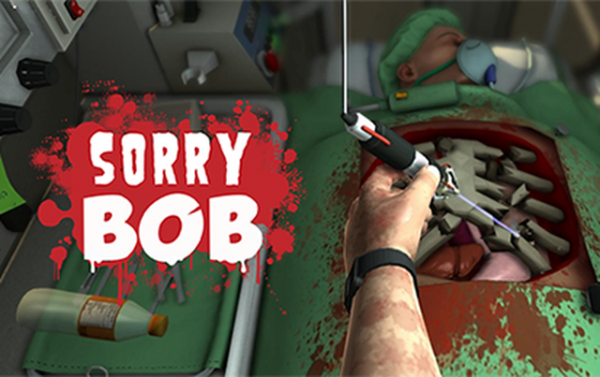
Nigel's Delicate Operation puts you in a first-person view above a work area, where the only tool you truly control is a floating hand. Instead of a standard cursor, every finger is bound to its own key: A for the pinky, W for the ring finger, E for the middle, R for the index, and the spacebar for the thumb. The mouse positions the hand, a left-click lowers it, and holding right-click rotates the wrist. That layout sounds simple until you try to pinch, lift, or steady something while three other fingers drift out of place.
Tasks and the Trouble Around Them
Each job begins with a stated objective, often replacing one item with another. You identify the required part, check nearby containers before touching anything, and use tools to open the area without slipping. Old items must come out cleanly and be set aside to free up space, and the new item has to go in before the clock expires. The physics engine makes tools slide or behave in ways you did not plan for, so a movement that works once may fail the next time. Moving elements in the environment can also force you to adjust mid-task.
Why Patience Beats Speed
The game rewards slow, deliberate action over fast reflexes. Rushing tends to turn a small wobble into a dropped part or a missed deadline, and recovering from one error often creates a second. Keeping useful items within reach helps stabilize a task before problems grow, and clearing removed pieces quickly keeps the work area readable. Practicing the finger controls in a low-pressure moment builds the muscle memory that makes later tasks manageable. The tone stays family-friendly even when the pressure rises, so mistakes feel like puzzles to solve rather than punishments.
Who This Is For
This is a single-player experience built for players who enjoy coordination challenges and problem-solving under mild time pressure. If you prefer fast action or forgiving controls, the awkward finger mapping will likely frustrate more than entertain. If you like the idea of mastering an intentionally clumsy interface and staying calm while a tool slides out of your grip, the design has a clear purpose.
Compatibility
FAQ
Comments
Sign in to comment
You must be logged in before posting a review or rating.
No comments yet. Be the first to comment!







Editorial Notes