
Structural Engineer Speedway
About
Structural Engineer Speedway stands out for its satisfying blend of construction and physics. The gradual difficulty curve keeps players engaged, while the trial-and-error learning process feels rewarding. The clean visuals and intuitive controls make it accessible, yet the puzzles offer real depth. It is a great choice for anyone who enjoys problem-solving and seeing their creations succeed.
Core Gameplay Loop
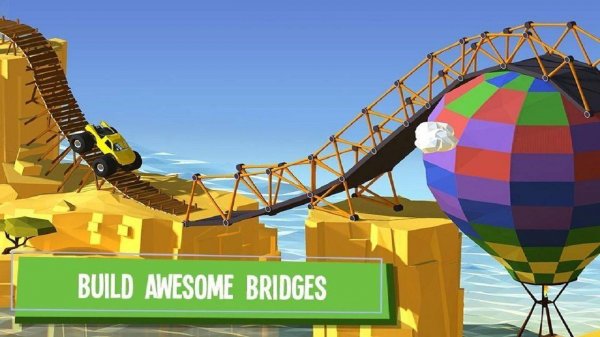
In Structural Engineer Speedway, players face a series of levels, each presenting a gap that must be crossed. The challenge lies in constructing a bridge using a limited set of materials, such as wooden planks or steel beams. After placing each piece, a test run is initiated: a car drives across the structure. If the bridge holds, the level is cleared. If it collapses, the player must redesign and rebuild, learning from the failure. This cycle of planning, building, testing, and refining forms the heart of the experience.
Material Choices and Physics
Different materials offer varying trade-offs between strength, weight, and cost. Wooden beams are light and inexpensive but may not support heavy loads. Steel beams are much stronger but cost more, limiting how many can be used per level. Players must balance their budget with the need for a stable structure. The game simulates basic physics, including gravity and force distribution, so the placement of supports and the angles of beams matter. Understanding these principles is key to success.
Level Design and Progression
Levels are arranged in a sequence of increasing complexity. Early stages introduce simple, short gaps with abundant materials, allowing players to grasp the basics. Later levels feature wider spans, limited resources, and obstacles such as uneven terrain or moving platforms. Some levels may require the bridge to curve or include a ramp for the car to reach a higher finish point. This gradual ramp in difficulty ensures that players are constantly challenged but never overwhelmed.
Visual and Interface Design
The game uses a clean, two-dimensional visual style that clearly shows the construction area and the car. The interface is straightforward: players select a material from a palette, then click and drag to place beams between anchor points. The car is a simple, cartoonish vehicle that drives automatically during the test. The overall look is functional and uncluttered, focusing attention on the puzzle at hand. This design makes the game accessible to players of all ages.
Learning Through Experimentation
There is no penalty for a bridge collapsing. Instead, each failure provides valuable information about what went wrong. The car may fall through a weak section, or the bridge may buckle under its own weight. Players can then adjust their design, trying different placements or materials. This trial-and-error approach encourages creative problem solving and a deeper understanding of structural principles. The satisfaction comes from seeing a carefully planned bridge successfully carry the car across.









Comments
Sign in to comment
You must be logged in before posting a review or rating.
No account? Create one
No comments yet. Be the first to comment!